
What Is Thermage Technology? Mechanism, Pros, Cons, and When to Get It
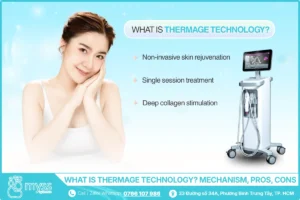
Thermage is a non-surgical skin rejuvenation technology that uses Capacitive Radio-Frequency (CRF) to deliver thermal energy to deep skin layers. RF energy heats the dermis and hypodermis to 50-55°C, triggering immediate collagen contraction and gradual regeneration over time. The result is firmer skin and softer wrinkles, without surgery.
This technology has been FDA-cleared since 2002. The current version is Thermage FLX, the fourth generation, with numerous improvements to speed and treatment comfort.
What is Thermage?
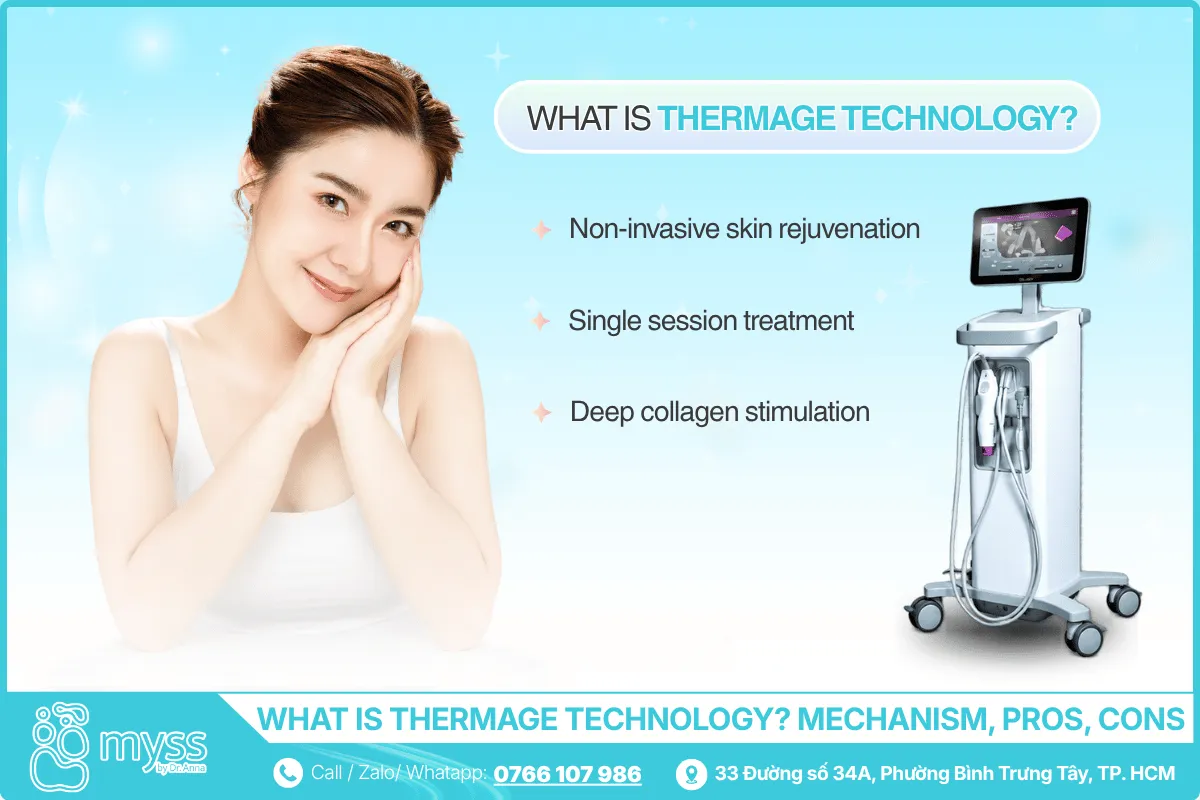
Thermage is a non-invasive skin rejuvenation device that uses Capacitive Radio-Frequency (CRF) to heat deep skin layers. Thermal energy triggers immediate collagen contraction and gradual regeneration over 2-3 months following treatment, resulting in firmer skin, softer wrinkles, and improved elasticity. It typically takes just one session, no surgery, no needles, no downtime required.
How Thermage works
Every Thermage energy pulse works through three sequential steps.
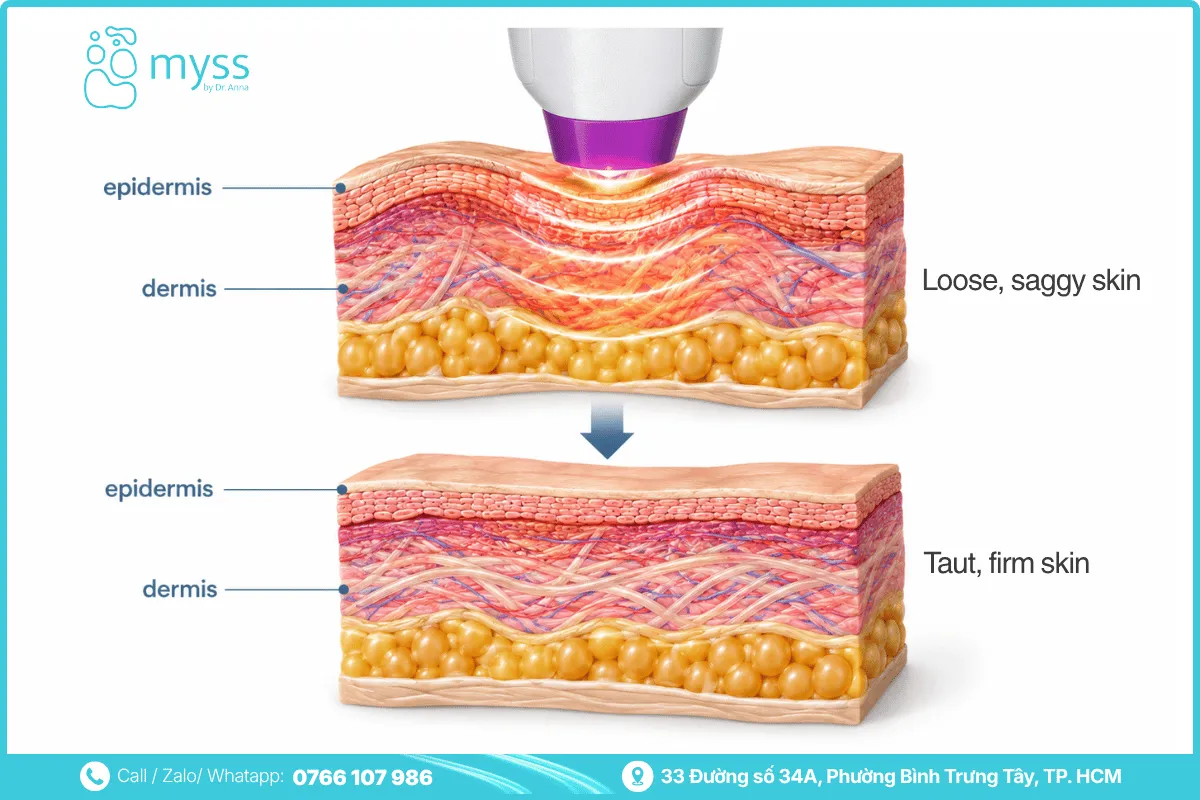
Delivering CRF waves to deep layers. The tip emits RF waves that pass through the epidermis without damaging the surface. Energy concentrates in the dermis and hypodermis below, where most of the skin’s collagen resides.
Collagen’s dual response. When temperature reaches 50-55°C, two things happen simultaneously. Existing collagen fibers contract immediately. This is why skin feels tighter right after the session. At the same time, the body receives a signal to repair and begins synthesizing new collagen. This process continues over the following 2-3 months.
Continuous surface cooling. Before and after each pulse, a cryogen spray system protects the outer skin layer. This mechanism allows energy to act powerfully at deep layers without burning the surface.
The combination of deep heat and surface protection is why Thermage produces more natural-looking results than mechanical skin-tightening methods.
How is Thermage FLX different from previous generations?
Thermage has gone through four generations since launch. Each generation solved a specific problem of the one before it.
| Generation | Name | Key improvement |
|---|---|---|
| 1 (2002) | Thermage | Original version, FDA approved, fairly painful |
| 2 | Thermage ST | Upgraded tip, larger coverage area per pulse |
| 3 | Thermage CPT | Comfort Pulse Technology, significantly less pain |
| 4 | Thermage FLX | Tip 4.0, AccuREP auto-adjusts energy, ~25% faster |
Thermage FLX is the version currently in use. Its biggest difference is AccuREP technology — a system that automatically calibrates energy based on tissue feedback during each pulse. Instead of setting one fixed energy level for the whole session, AccuREP continuously adjusts to optimize results across different skin areas. The Tip 4.0 also has a larger coverage area, shortening full-face treatment time compared to the CPT generation.
Is Thermage technology good?
Thermage genuinely works. But it isn’t the right choice for everyone.
What Thermage does well
No surgery, no needles, no downtime needed. This is a major advantage for busy people or those wary of invasive procedures. You can go straight back to your day after the session.
It reaches deeper than many common methods. Thermage doesn’t just work on the surface — it affects the dermis, hypodermis, and subdermal tissue layer. Results look more natural than mechanical skin-tightening methods.
Just one session needed. No lengthy treatment schedule, no weekly return visits like many other methods.
Results last 1-2 years. That’s a notable figure compared to many other non-surgical methods that only last a few months.
Thermage has been FDA-cleared since 2002. Over 20 years of clinical data is a reliable foundation for its safety.
What to know before getting it
Many articles about Thermage only mention the upsides. Here are the more specific limitations.
There’s pain during the procedure. Even though Thermage FLX has improved significantly over previous generations, the heat and contraction sensation with each pulse is still noticeable. People with a low pain threshold will find it more uncomfortable, especially around the chin and temples.
Results aren’t the same for everyone. A 35-year-old with a still-healthy collagen base will see much clearer results than a 55-year-old. Each person’s outcome varies based on their actual skin condition.
Results come slowly. Skin doesn’t visibly change in the first week. It takes 2-4 weeks before you start noticing a difference. Results peak at months 2-3. Anyone expecting instant change will be disappointed.
The cost is high. Thermage isn’t something to try once just for fun. If you’ve decided to do it, make sure it’s genuinely the right method for your current skin condition.
Common side effects after treatment include redness and mild swelling, lasting a few hours to a few days. Serious complications are rare but can occur when performed at an inexperienced clinic or with poorly set parameters.
Which areas can Thermage treat?
This is where Thermage has a clear edge over many other technologies. Its scope of application is quite broad, not limited to the face.
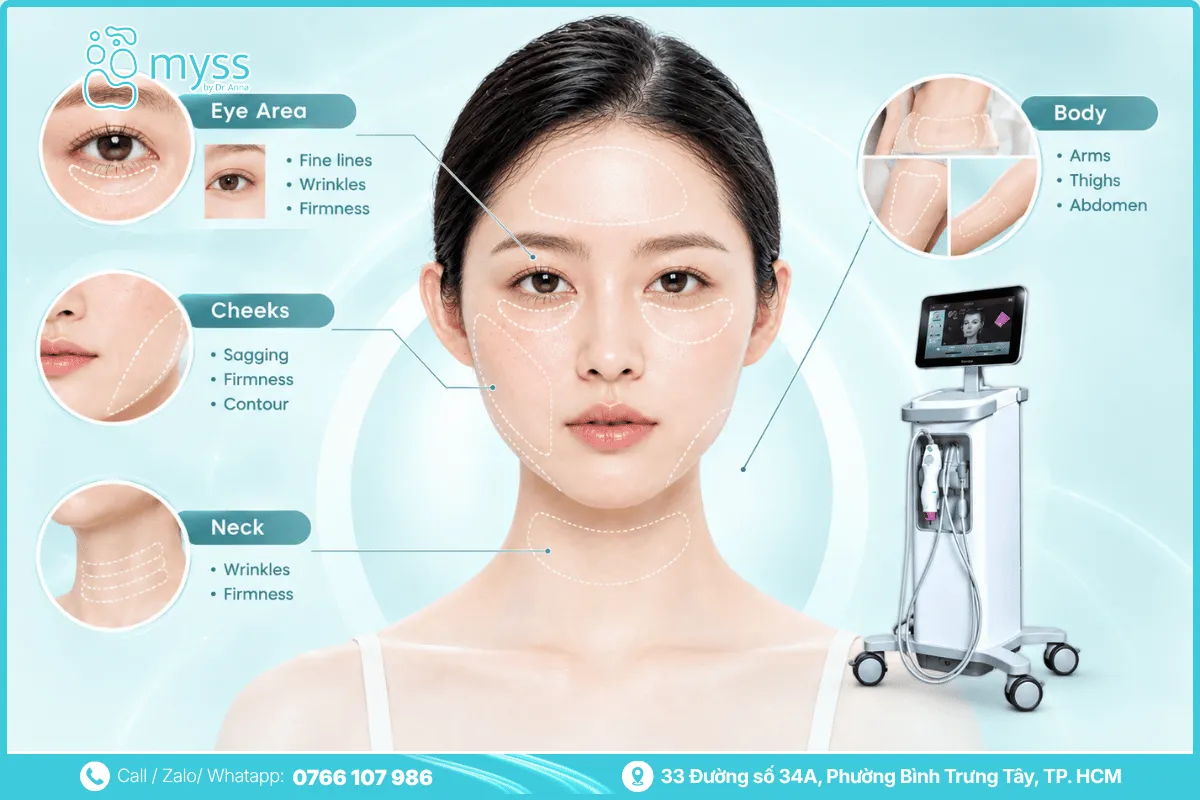
The face is the most common application. Thermage is effective for sagging cheeks, jowls, marionette lines, and the forehead. Best suited to mild-to-moderate sagging.
The eye area is one of Thermage’s distinctive features. It’s one of the few non-surgical technologies FDA-cleared for treating the lower eyelid area. Suitable for mild lower-lid laxity and puffiness. See more: eye rejuvenation service at Myss Clinic.
The neck is often overlooked when thinking about rejuvenation, but it’s a place that shows age very clearly. Thermage helps improve neck sagging and horizontal neck lines.
The body, including the abdomen, thighs, and arms: Thermage Body addresses loose skin after weight loss or pregnancy. The treatment area is larger, so each session also takes significantly longer.
Who should and shouldn’t get Thermage?
Good candidates for Thermage
- People aged 30-55 with mild to moderate signs of aging. This is the group that typically sees the clearest results, since their collagen base is still healthy enough to respond well to stimulation.
- People who want to maintain and slow the aging process, rather than waiting until skin has sagged significantly before addressing it.
- People who need a “one-and-done” method because of a busy schedule, and aren’t suited to lengthy multi-session treatments.
- People with no active skin conditions who want to improve overall skin firmness.
- Who shouldn’t get Thermage
Pregnant or breastfeeding women.
- People with active skin injuries, infections, or dermatitis in the intended treatment area.
- People with implanted electronic devices such as pacemakers. RF waves can interfere with these devices.
- People with significant skin sagging. Thermage has a certain effectiveness limit. When sagging is more advanced, combining multiple methods or considering a surgical intervention is needed.
- People expecting results equal to a surgical facelift. Thermage doesn’t produce that outcome. If that’s the goal, this isn’t the right choice.
- People under 25 typically don’t need it yet. At this age, the collagen base is still healthy and there aren’t significant enough aging signs to warrant intervention.
- What does the Thermage treatment process look like?
Step 1: Consultation and assessment. The doctor reviews skin condition, degree of aging, elasticity, and medical history. This is the most important step. Thermage’s results heavily depend on choosing the right candidate and setting parameters suited to each individual.
Step 2: Preparing the treatment area. Cleansing the skin, marking a positioning grid on the face to ensure even coverage. Some clinics apply topical numbing cream for about 30-45 minutes beforehand to reduce discomfort.
Step 3: Performing the treatment. The technician moves the Thermage FLX tip along the marked points. Each pulse delivers CRF waves combined with cryogen cooling. Duration is 30 to 90 minutes depending on the treatment area and number of pulses.
Step 4: End-of-session assessment. After treatment, skin may be slightly red and warm. This is a normal response, usually resolving within a few hours. The doctor checks in and provides specific aftercare guidance.
Step 5: Tracking results. Results start appearing from week 2-4. They peak at months 2-3 as new collagen completes forming. Effects last 12-24 months depending on individual constitution and post-treatment skin care.
Aftercare following Thermage
Proper aftercare helps results last longer and avoids unnecessary risk.
In the first 24-48 hours, avoid high heat: saunas, hot showers, intense exercise. Skin has just undergone thermal stimulation and needs time to settle.
Daily sunscreen is mandatory. Use SPF 50+ even indoors near windows. UV rays break down newly formed collagen. This is the most common reason Thermage results don’t last as long as expected.
Moisturize regularly. Skin after treatment needs adequate hydration to support recovery and regeneration.
In the first week, pause strong products like retinol and high-concentration AHA/BHA. Keep your skincare routine simple.
Contact your doctor if redness persists beyond 72 hours or numbness hasn’t improved after 2 weeks.
Frequently asked questions about Thermage technology
Does Thermage hurt?
There’s a heat and contraction sensation with each pulse. Thermage FLX has reduced pain compared to previous generations thanks to AccuREP and continuous cooling. Most people describe it as moderately uncomfortable, not unbearable. The level depends on individual pain threshold and treatment location. The chin and temple areas tend to be more sensitive than others.
How soon do you see results?
Skin feels slightly tighter right after the session due to immediate collagen contraction. Results become clearer from week 2-4. They peak at months 2-3 as collagen regeneration completes.
Is Thermage FLX better than older generations?
Yes, in two main ways: more comfortable and faster. AccuREP auto-adjusts energy per pulse to optimize results across different skin areas. The Tip 4.0 has a larger coverage area, cutting treatment time by about 25% compared to the CPT generation.
Do you need to repeat treatment?
Results last 1-2 years. After that, skin continues aging normally. Many people choose to repeat a session after 1-2 years to maintain results.
Is Thermage suitable for people over 60?
It’s still possible, but results are typically more modest. At this age, the collagen base has declined significantly and the ability to respond to regenerative stimulation is also weaker. Each case needs a doctor’s specific assessment rather than a blanket conclusion.
Can Thermage be combined with other methods?
Yes, and many doctors proactively combine Thermage with filler injections, botox, or other dermatological treatments for more comprehensive results. The order and spacing between procedures needs specific guidance from your doctor — don’t combine them on your own.
Thermage is good but is it the right choice for you?
Thermage is a technology with proven value backed by over 20 years of clinical use. But no technology is the right choice for everyone.
Thermage’s results depend on three things: your starting skin condition, whether treatment parameters are set appropriately, and whether the practitioner has enough experience. With the same Thermage FLX device and the same person, results can vary considerably depending on who performs it.
If you’re considering Thermage or aren’t sure which method truly suits your current skin condition, book a consultation with a dermatologist at Myss Clinic. The doctor will examine your skin, assess your degree of aging, and recommend the most suitable method. It might be Thermage, or it might be another technology better suited to your condition. You’ll get a specific answer before making a decision. See more: skin rejuvenation and lifting service at Myss Clinic.