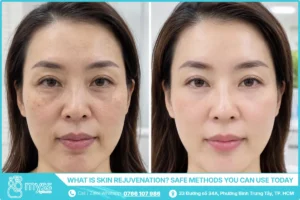


HIFU facelifting works, but the improvement is more modest than most advertising suggests. Pooled research measured brow-lift elevation of 5.6% to 7.2% at the 6-month mark – but only when the treatment lines run diagonally outward. Going horizontal, the number drops to 1% to 3.7%. That’s a twofold difference from treatment direction alone, which is why the person holding the device matters more than the device’s brand name.
This article answers the three questions people considering HIFU ask most: how effective is it really, how long does it last, and am I actually a good candidate.
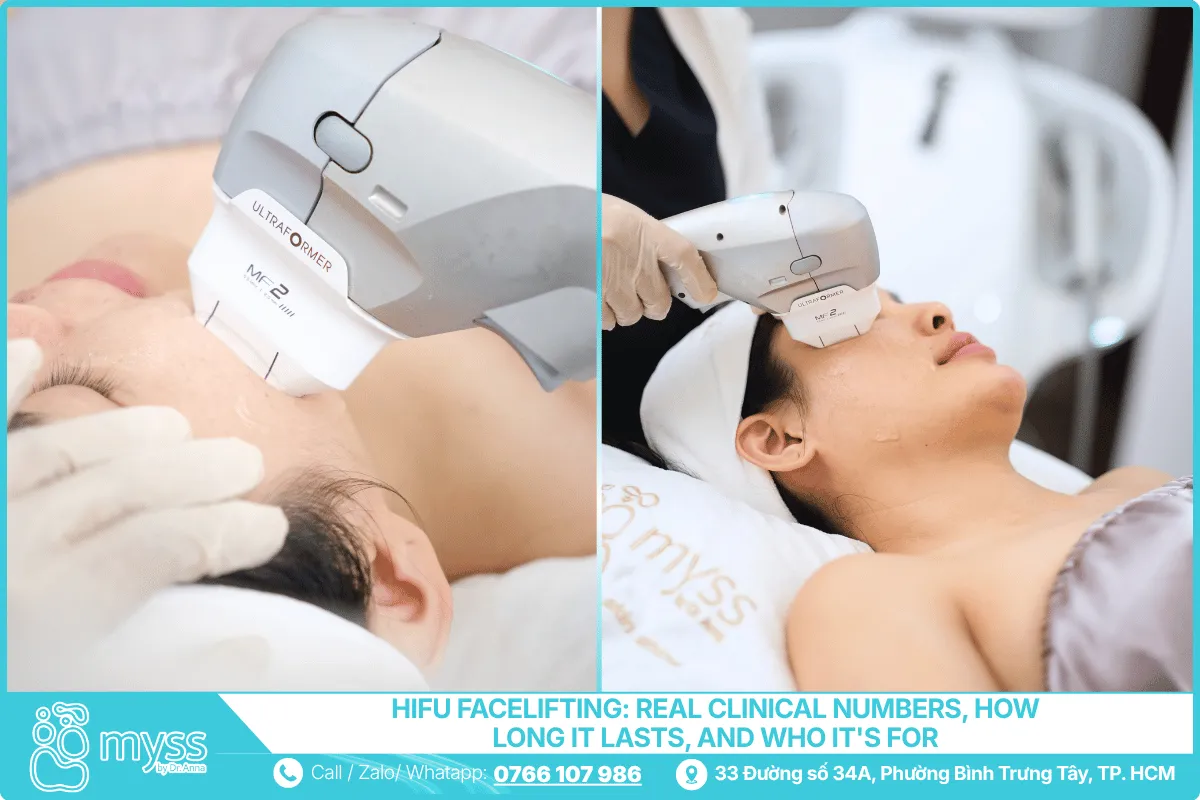
What is HIFU facelifting?
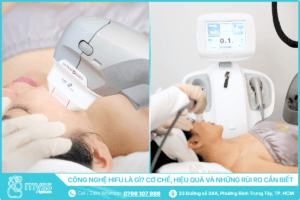
HIFU uses focused ultrasound to deliver energy to deep layers under the skin without damaging the surface. At the focal point, temperature rises to around 60-70°C, creating tiny thermal coagulation points that trigger the body to produce new collagen.
At a depth of 4.5mm specifically, energy reaches the SMAS layer – the superficial muscle fascia. This is the very layer a surgeon pulls and secures during a surgical facelift. The ability to affect the SMAS without cutting the skin is why HIFU is classified as a lifting technology, not just a surface-tightening one.
For a deeper look at the mechanism, the three depth levels, and the difference between devices with real-time imaging guidance and those without, see the full overview. What is HIFU technology?
Which areas does HIFU facelifting target?
Not every area of the face responds the same way. The areas most commonly treated:
- Jawline. The area where change is most noticeable. The face becomes more defined along its contours.
- Chin area. Combines lifting with an effect on the fat layer under the chin.
- Lower cheeks. Improves sagging that deepens the nasolabial folds.
- Eyebrows. A slight lift to the brow tail, softening a tired-looking gaze. This is also the area with the most solid measured data.
- Neck. Thin skin, little fat, and usually ages earlier than the face.
Each area uses a different depth. Thin-skin areas like around the eyes use a shallower tip, while the jaw and neck use a deeper one. A single session typically combines several depths rather than running just one.
Is HIFU facelifting effective?
Numbers from clinical research
A pooled analysis of 16 studies on the effectiveness of a single microfocused ultrasound treatment found:
- Measured brow lift of 0.47mm to 1.7mm
- As a percentage: 5.6% to 7.2% at the 6-month mark for diagonal-outward lines, versus only 1% to 3.7% for horizontal lines
- Under-chin area reduced by 26mm² to 45mm² on profile photos
- By physician assessment (n = 337), 92% of patients showed improvement at 90 days
- By patient self-assessment (n = 81), improvement rose from 42% at 90 days to 53% at 360 days, though the study describes this as mild improvement.
Another study in the same pooled analysis measured the proportion of patients reaching over 0.5mm of brow lift. This is the most telling figure of all:
| Timepoint | % reaching over 0.5mm lift |
|---|---|
| 3 months | 35% |
| 6 months | 45% (peak) |
| 1 year | 39% (declined) |
This table says three things advertising rarely mentions.
First, more than half of participants didn’t reach 0.5mm of lift even at the best timepoint. HIFU doesn’t produce uniform results.
Second, results peak at 6 months and then decline. From 45% down to 39% after one year.
Third, these studies were all conducted on female patients. Men have different skin and subdermal tissue structure, and there isn’t yet enough data to assume equivalent results.
Timeline to see results
Many places in Vietnam advertise visible lifting right after the session. That doesn’t match how the technology actually works.
| Timepoint | What’s actually happening |
|---|---|
| Right after treatment | Skin feels slightly tight from swelling caused by the heat response. This is not lifting yet. |
| 1-2 weeks | Swelling subsides. May still be tender to the touch. |
| 2-3 months | New collagen starts taking shape. Change becomes visible. |
| 3-6 months | Results reach their peak. This is the timepoint used for assessment. |
Research notes results may not be fully visible until 3 to 6 months after treatment, since collagen remodeling happens slowly.
So take a photo before treatment. Without a baseline photo, you’ll have no basis for assessment at the 3-month mark beyond how you feel.
How long do HIFU facelift results last?
About 12 months.
The longest follow-up data currently available stops at the 1-year mark. The pooled research states clearly there is no longer-term follow-up data.
Within that year, results don’t stay flat – they peak. The proportion reaching over 0.5mm of lift is highest at 6 months and then declines, as the table above shows.
Beyond that mark, there’s no research to draw conclusions from. So claims of “results lasting 3-5 years,” seen on many aesthetic clinic websites, have no data backing them.
The reason is straightforward: aging doesn’t stop after you get HIFU. New collagen eventually breaks down over time too, while existing collagen keeps declining with age.
How many sessions are needed for results?
For the face, studies typically use 1 to 2 sessions. This is a major difference from laser or peels, which need multiple consecutive sessions.
If a clinic recommends 5-6 consecutive HIFU sessions over a few months, ask for the reasoning. Chances are they’re splitting one treatment’s shot count across multiple sessions to make the price list look more palatable.
Who is suitable and who isn’t for HIFU facelifting?
As the numbers above show, not everyone who gets HIFU sees clear results. Choosing the right candidate is the deciding factor.
Good candidates
- Sagging at a mild to moderate level, usually ages 30-55
- Skin that still has elasticity, hasn’t fully lost its ability to bounce back
- Jawline just starting to blur, slightly sagging cheeks, an emerging double chin
- Enough subdermal tissue in the area to be treated
- Accepts a natural degree of improvement, doesn’t expect surgical-level change
Not suitable
- Significant sagging, visibly loose skin. Pooled research classifies excessive sagging as a relative contraindication, since results decline as sagging severity increases. A surgical facelift is the more reasonable choice.
- BMI over 30. Also classified as a relative contraindication in the same research, for the same reason: positive outcomes decrease as BMI rises.
- Thin faces with little subdermal fat. Higher risk of fat atrophy. The result can leave the face looking hollow instead of firmer.
- Very thin skin. The safety margin between tissue layers is narrow, so small errors have consequences.
- Unrealistic expectations. If you want results comparable to surgery, HIFU will disappoint you wherever you get it done.
Medical contraindications
- Pregnant or breastfeeding
- Have a pacemaker, defibrillator, or metal implants in the treatment area
- The treatment area has an active infection, lesions, or severe inflammatory acne
- History of keloid or hypertrophic scarring
- Recent filler or silicone injections in the intended treatment area
- Bleeding disorders or currently on blood thinners
At Myss Clinic, a dermatologist examines your skin and assesses the degree of sagging before giving any recommendation. If you fall into the not-suitable group, the doctor will say so plainly instead of selling you a treatment package.
Side effects and complications of HIFU facelifting
HIFU is safe when done correctly, but saying it has no side effects at all isn’t accurate.
Common, self-resolving side effects: redness, mild swelling, tenderness to the touch, mild numbness, small bruises. Most resolve within a few days to two weeks. Research describes the procedure as causing moderate pain, with or without transient redness.
Less common side effects occur in about 2% of cases (14 out of 573 patients): paresthesia, bruising, tingling, jawline burns, white marks on skin, contact dermatitis.
Rare but serious complications, documented in 2024 and 2025 pooled reviews:
- Localized fat atrophy, leaving a hollowed area. This is the most concerning complication for people with thin faces.
- Nerve injury: prolonged numbness, paresthesia, and in some cases eyelid ptosis.
- Burns and scarring from energy settings that were too high.
- Post-inflammatory hyperpigmentation, more notable in Vietnamese skin.
Vietnamese skin mostly falls into Fitzpatrick types III to IV, with larger melanosomes and more melanin, meaning a higher risk of post-inflammatory hyperpigmentation than lighter skin. Asian expert consensus therefore recommends adjusting settings to skin type rather than applying Western protocols unchanged.
Most complications don’t come from the technology itself but from three causes: incorrect settings, a practitioner without adequate anatomical knowledge, and inadequate tissue assessment before treatment.
HIFU compared with other lifting methods
HIFU isn’t the only option, and it isn’t the best option for every situation. The table below compares by mechanism and depth of effect.
| Method | Mechanism | Depth of effect | Best suited for |
|---|---|---|---|
| HIFU | Focused ultrasound, creates thermal points at 60-70°C | 1.5 / 3.0 / 4.5mm, reaches the SMAS | Mild to moderate sagging, needing jawline and chin lift |
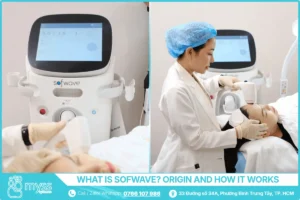
| Sofwave | Ultrasound emitting multiple parallel beams, heating a wide area | Concentrated at 1.5mm, mid-dermis | Improving skin quality, fine wrinkles, prioritizing safety |
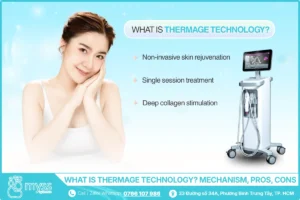
| RF (Thermage) | Radiofrequency waves heat tissue through resistance | Dermis and subdermal tissue, path less predictable than ultrasound | Widespread skin laxity, improving surface texture |
| Collagen threads | Direct mechanical lift plus collagen stimulation around the thread | Subdermal fat layer | Needing directional lift, seeing results sooner |
| Surgical facelift | Direct pulling and securing of the SMAS layer | SMAS, direct intervention | Significant sagging, wanting dramatic, long-lasting change |
Key point: HIFU goes deepest among non-invasive methods, but Sofwave concentrates energy in a narrower band, so it carries lower risk for people with thin skin. RF heats a broad area, but current flow depends on tissue resistance, making it less predictable than ultrasound.
No method is universally superior. Choosing correctly depends on your specific skin condition and needs a doctor’s direct assessment.
The HIFU facelifting process at Myss Clinic
- Consultation and skin examination. The doctor determines the degree of sagging, subdermal tissue thickness, Fitzpatrick skin type, and history of previous aesthetic procedures. This step decides whether you should proceed at all.
- Baseline photos. Standardized angle and lighting for comparison at the 3-month mark.
- Treatment planning. Choosing areas, depths, number of shots per area, and energy level based on skin type.
- Numbing. About 30-45 minutes.
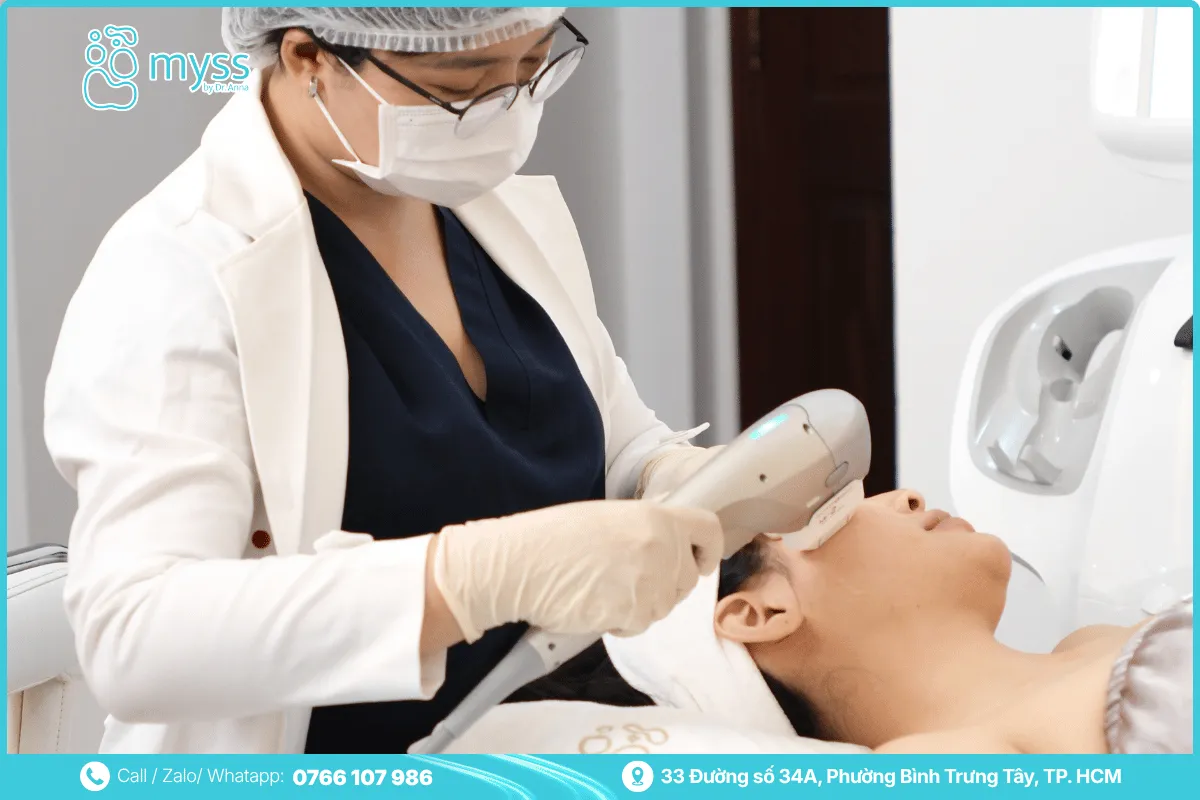
- The procedure. About 45-90 minutes depending on the number of areas.
- Follow-up. At 1-month and 3-month marks, with comparison photos and response assessment.
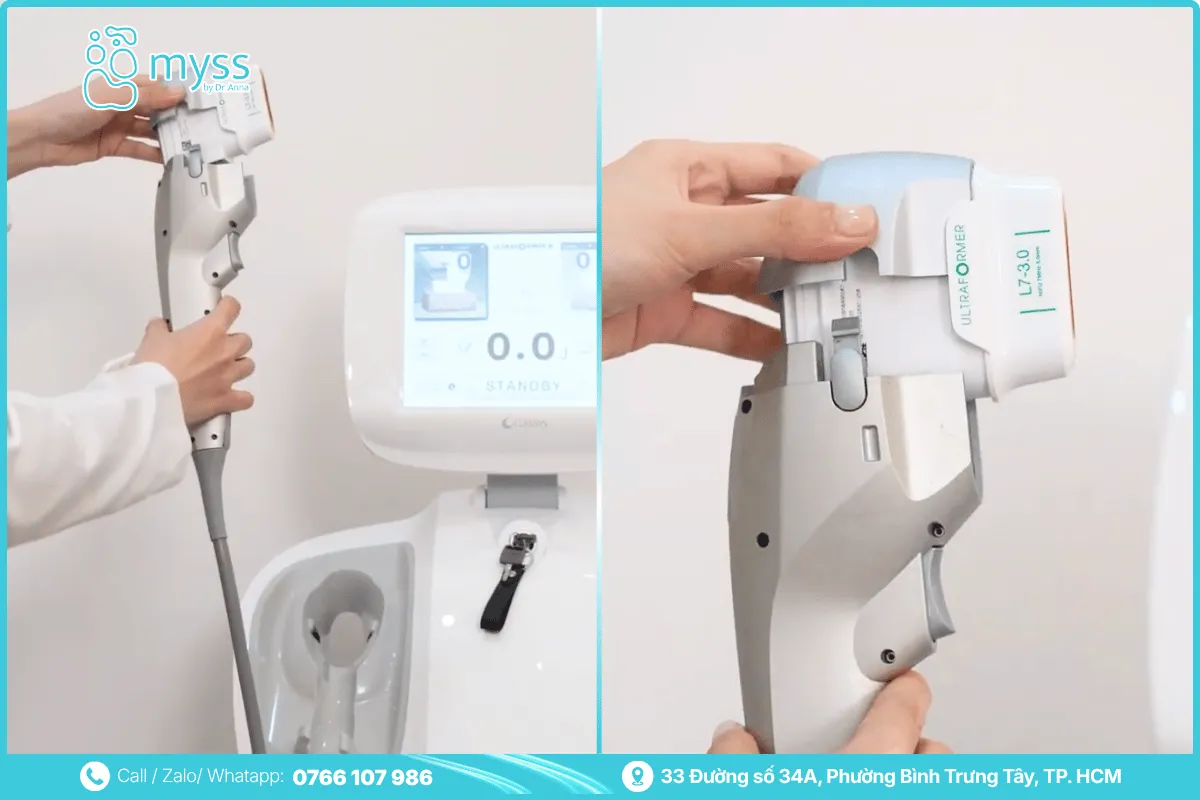
Myss Clinic uses the Ultraformer III from Classys (Korea), a device certified by KFDA, CE Mark, and Thai FDA.
Cost of HIFU facelifting
At Myss Clinic, HIFU facelifting with the Ultraformer III starts from 4,000,000 VND for a 100-shot package. The exact cost depends on shot count and treatment area, determined only after the doctor examines your skin and assesses your degree of sagging.
Four factors create price differences between clinics:
- Shot count. The biggest determining factor. Tips have a limited shot count and represent the clinic’s actual consumable cost.
- Treatment area. Full face plus neck is very different from just the jawline.
- Device type. Devices with imaging guidance cost more than those without.
- Who performs it. A dermatologist versus a technician.
An unusually low price usually comes with one of three catches: an unverified device, a tip that’s already exceeded its rated shot count, or fewer actual shots than advertised.
When comparing quotes between clinics, ask for the specific shot count rather than just looking at the total price. Two quotes at the same price, one with 300 shots and one with 800, are two entirely different services.
To know how many shots your case needs per area, you’ll need a skin examination. The doctor will provide a treatment plan with a specific quote after assessing your skin directly.
Before and after care for HIFU facelifting
Before treatment: arrive with no makeup or light makeup so the doctor can assess your skin accurately. Disclose any history of filler, thread lifts, or silicone injections. If you’re on blood thinners, tell your doctor.
After treatment: wash your face gently by hand, use sunscreen every day, pause retinol and strong acids for about 5-7 days, avoid saunas and intense exercise for the first few days. Contact your doctor if redness lasts more than a week, a hollow area appears, or numbness hasn’t improved after 2 weeks.
Frequently asked questions about HIFU facelifting
Is HIFU facelifting effective?
Yes, but at a moderate level. Pooled research measured brow lift of 0.47mm to 1.7mm, equal to 5.6% to 7.2% at 6 months when the technique runs in the correct direction. The highest proportion reaching over 0.5mm of lift was 45% at 6 months, meaning more than half didn’t reach that mark. Results are clearest in mild to moderate sagging.
How long do HIFU facelift results last?
About 12 months based on current data, though results don’t stay constant throughout. The proportion reaching over 0.5mm of lift peaks at 45% at 6 months, then drops to 39% at 1 year. No study has tracked results beyond 1 year, so claims of 3-5 years of results have no basis.
Does HIFU facelifting hurt?
You’ll feel bursts of heat and tenderness during the procedure, more noticeable near bone areas like the jawline and eyebrows. Numbing cream applied 30-45 minutes beforehand significantly reduces this. Some people feel tenderness to the touch for a few days to two weeks afterward.
How many HIFU sessions does it take to see results?
For the face, studies typically use 1 to 2 sessions. This differs from laser or peels, which need multiple consecutive sessions. If advised to do 5-6 consecutive sessions, ask for the specific clinical reasoning behind that plan.
Can HIFU replace a surgical facelift?
No. HIFU’s improvement is moderate and natural, while surgery directly intervenes on the SMAS layer, producing far more dramatic change. For significant sagging, surgery is the more reasonable choice on both results and cost-effectiveness.
How soon can you repeat HIFU facelifting?
Usually considered after about 12 months, once the previous treatment’s effect has faded. The exact timing depends on your rate of aging, individual response, and the assessment at your follow-up visit.
Can HIFU facelifting make your face look hollow?
It can, if energy enters the subdermal fat layer instead of the fascia. This is called localized fat atrophy, one of the most frequently documented complications. People with thin faces and little subdermal fat are at higher risk and need careful assessment before treatment.
Should you choose HIFU or Sofwave?
HIFU reaches the SMAS layer, so it’s suited when the main goal is jawline and chin lifting. Sofwave concentrates energy in the mid-dermis, leaning toward improving skin quality and fine wrinkles, with lower risk for thin skin. The right choice depends on your specific skin condition and needs a doctor’s direct assessment.
Next steps if you’re considering it
What determines your HIFU facelift results isn’t finding the cheapest clinic – it’s knowing for certain whether you’re a good candidate before spending. More than half the people in the research didn’t reach a meaningful lift. Much of that difference comes down to selecting the right candidate.
Book a skin consultation with a dermatologist at Myss Clinic. After the visit, you’ll know where your degree of sagging stands, whether HIFU is the right choice, how many shots each area needs, and if not, which method suits you better.
Skin rejuvenation and lifting service at Myss Clinic.
About the author
Dr. Le Thi Van Anh (Dr.Anna) is a Level II Specialist in Dermatology with over 10 years of experience examining, diagnosing, and treating skin conditions. She currently serves as Medical Director at Myss Clinic, directly overseeing clinical expertise, treatment protocols, and quality control at the clinic.
Areas of focus: acne treatment, melasma and pigmentation disorders, scar treatment, skin rejuvenation, and internal aesthetic medicine.
See more: Dr. Le Thi Van Anh’s profile.
Sources
- A Systematic Review of the Efficacy of Microfocused Ultrasound for Facial Skin Tightening. Int J Environ Res Public Health, 2023;20(2):1522. Primary source for all effectiveness figures in this article.
- Microfocused Ultrasound With Visualization (MFU-V) Effectiveness and Safety: A Systematic Review and Meta-Analysis. Aesthetic Surgery Journal, 2025;45(3):NP86.
- Skin physiology and safety of microfocused ultrasound with visualization for improving skin laxity. Clin Cosmet Investig Dermatol.
- Microfocused Ultrasound With Visualization: A Systematic Review of Adverse Events. PubMed, 2024.
- Complications and Risks of High-Intensity Focused Ultrasound (HIFU) in Esthetic Procedures: A Review. Applied Sciences, 2025;15:4958.
- Prevention of Post-Inflammatory Hyperpigmentation in Skin of Colour: A Systematic Review. Australas J Dermatol, 2025.
- Customized Treatment Using Microfocused Ultrasound with Visualization: A Pan-Asian Adaptation of the Expert Panel’s Gold Standard Consensus. J Clin Aesthet Dermatol.
- Customizing Microfocused Ultrasound With Visualization Treatment for Facial Lifting in Asian Men: Experience and Practical Insights From Korea. PMC12147194.
This article is for informational purposes only and does not replace a consultation or diagnosis from a doctor. Treatment results vary depending on individual skin condition and constitution.