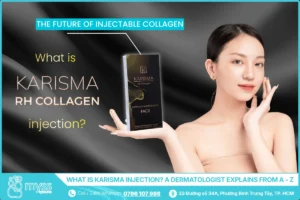

What does “Karisma BAP injection” actually mean?
This is the point that confuses people most. When they hear “BAP injection,” many assume it means injecting into muscle tissue (intramuscular), like a vaccine shot. The reality is entirely different.
“BAP” stands for Bio Aesthetic Points. This is an intradermal injection technique, injected into the dermis layer of the skin, not muscle. Karisma is absolutely never injected intravenously. There’s no medical basis for that method of use.
Why is it called “BAP points”?
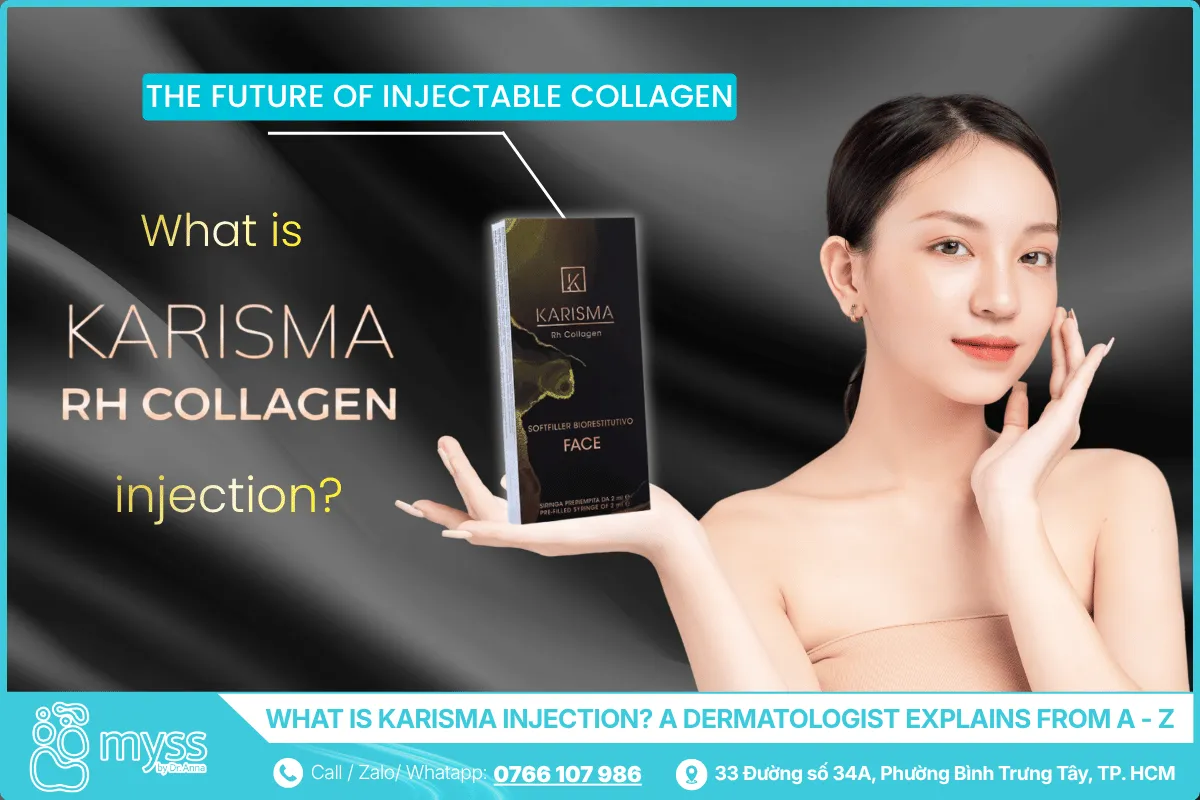
The BAP technique identifies specific injection points on the face based on skin anatomy and physiology. Rather than injecting broadly, the doctor injects precisely at points with the highest density of collagen receptors to optimize regenerative stimulation.
The number of injection points depends on the protocol:
- K5 (Basic BAP): 5 points per side of the face, 10 points total, suited for smaller treatment areas or a first session
- K15+ (Advanced BAP): 15 points or more, covering a wider area, typically used for the full face
The difference between K5 and K15+ isn’t just the number of points but also coverage area and product volume used. When consulting, ask the clinic which protocol they use and how many vials per session, so you can compare prices accurately. The BAP technique is documented by Fox Pharma (UK), one of Europe’s aesthetic injection training providers.
What country is Karisma from? What’s in it?
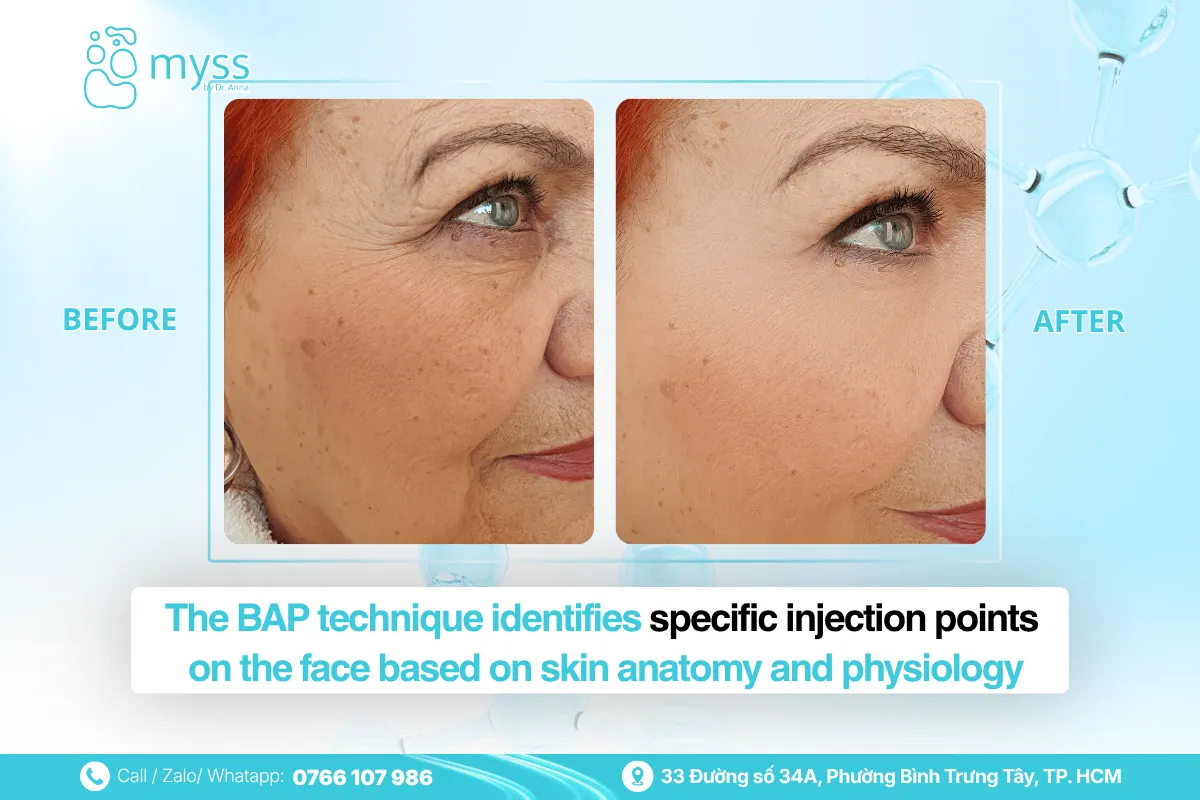
Karisma is manufactured by Taumed, a medical company from Italy, headquartered in Rome.
In Vietnam, Karisma has been registered as a Class D Medical Device, the strictest control category in Vietnam’s medical device classification system. You can look up its registration on the dav.gov.vn portal using the keywords “Taumed” or “Karisma Rh Collagen.”
Karisma’s formula consists of 3 main components:
- Rh Collagen (Recombinant Human Collagen): This is the most distinctive ingredient. “Rh” stands for Recombinant Human, recombinant collagen produced from genetically modified silkworms (Bombyx mori) carrying human collagen genes. The result is a collagen with a structure nearly identical to human collagen, with biological compatibility of up to 99.9% according to the manufacturer’s claims. Unlike collagen extracted from animals (cattle, pigs), Rh Collagen carries no risk of animal-to-human disease transmission.
- High-molecular-weight, non-crosslinked Hyaluronic Acid: Unlike the HA in filler (crosslinked to form a stable gel), the HA in Karisma is in its natural form, easily absorbed. Its main function is hydration and stimulating fibroblast activity.
- CMC (Carboxymethylcellulose): An anti-inflammatory base that helps stabilize the formula and extend the active ingredients’ retention time in the skin.
This combination works as an activation signal. Rather than replacing collagen from the outside, Karisma prompts the skin’s own fibroblasts to synthesize type I collagen.
Is Karisma a filler?
Karisma is not a filler. Filler adds volume directly from the outside and produces results right after injection. Karisma is a biostimulator, working by stimulating the body’s internal biological regeneration process, with results accumulating gradually over 1-3 months and no immediate volumizing effect.
The table below compares 3 product categories that are often confused. This is information not fully covered by any of the top 5 Google results:
| Criteria | Karisma (Biostimulator) | HA Filler | Profhilo (Bioremodeling) |
|---|---|---|---|
| Mechanism | Stimulates endogenous collagen | Direct volume injection | HA bioremodeling, stimulates collagen + elastin |
| Time to see results | 1-3 months | Immediately after injection | 2-4 weeks |
| Main effect | Improves skin quality | Adds volume | Improves skin quality |
| Duration | 9-12 months | 6-18 months (varies by type) | 6-9 months |
| Dissolvable | Yes (biologically absorbed) | May dissolve / can be dissolved with hyaluronidase | Yes |
| Best suited for | Early skin aging, loss of elasticity, wanting natural results | Specific volume loss (cheeks, lips, eye area) | Mild skin sagging, overall loss of facial elasticity |
The right choice depends on your treatment goal, no single product is universally “better.” See more: a comparison of non-surgical skin rejuvenation methods at Myss Clinic for an overview before deciding.
What does Karisma do, and how long until you see results?
According to manufacturer Taumed and clinical observations reported by clinics using it, Karisma delivers the following effects:
- Improves skin hydration and elasticity
- Reduces fine wrinkles
- Improves shallow acne scars
- Mild lifting, reduces sagging
- Stimulates type I procollagen synthesis
One thing needs to be said plainly: no independent peer-reviewed clinical study (RCT) has been published specifically for Karisma. Effectiveness claims come from the manufacturer and reports from clinics that use it. The BAP technique in general has a preliminary study (60 participants) showing high satisfaction, but it wasn’t a trial specifically for Karisma Rh Collagen.
This doesn’t mean Karisma is ineffective. It means the current level of scientific evidence is lower than for methods backed by more independent research.
Realistic results timeline
- Right after injection: Skin feels slightly plump and more hydrated (from HA and CMC)
- 7-14 days: Skin settles after the injection reaction, pores start to look smaller
- 1-3 months: Peak collagen regeneration, the point of clearest results
- 9-12 months: Results hold before a touch-up injection is needed
If you’re considering Karisma to improve acne scars, note that deep scarring typically needs a combination of methods. Learn more about in-depth aesthetic scar treatment at Myss Clinic.
How many Karisma sessions are needed? What’s the treatment plan?
The standard treatment plan is 3 sessions, spaced 4-6 weeks apart. This spacing gives skin enough time to complete one collagen-stimulation cycle before receiving a new signal.
After the basic treatment plan, a maintenance touch-up is needed every 6-12 months depending on each person’s rate of aging. Faster-aging skin needs earlier touch-ups.
Regarding treatment areas and product volume:
- Treatment areas: Full face (cheeks, forehead, neck), eye area, back of hands
- Vials per session: Usually 1-2 vials (2ml/vial) depending on treatment area
- K5 vs K15+: The K15+ protocol uses more product volume, covering a wider area
An important note when comparing prices between clinics: ask specifically how many vials are used per session. A lower price per session using only 1 vial for the full face isn’t equivalent to a higher price per session using 2 vials.
Who should and shouldn’t get Karisma?
Karisma isn’t suitable for everyone. Understanding indications and contraindications matters more than knowing the price.
Good candidates (worth considering):
- Skin starting to lose elasticity, with fine wrinkles appearing, usually ages 25-50
- Mild sagging, enlarged pores, skin lacking hydration
- Wanting to improve overall skin quality without significantly changing appearance
- Skin that’s recovered from scar treatment, wanting to maintain results and continue collagen regeneration
Should not get it (contraindicated):
- Pregnant or breastfeeding women
- Skin with active acute inflammation, pustular acne, or a flaring skin allergy
- Bleeding disorders or currently on blood thinners (therapeutic-dose aspirin, warfarin)
- History of allergy to collagen or Hyaluronic Acid
- Severe immune disorders or currently on immunosuppressant medication
At Myss Dermatology Clinic, every client goes through a skin scan and medical history review before a Karisma consultation. This isn’t a formality, this information directly determines whether you should get the injection and which specific treatment plan suits you.
How much does Karisma injection cost?
Reference pricing in Ho Chi Minh City (not Myss Dermatology Clinic’s pricing):
- 1 session / 1 small area: 5,000,000 – 8,000,000 VND
- Basic full face (K5): 12,000,000 – 18,000,000 VND / session
- 3-session full-face treatment plan: 30,000,000 – 45,000,000 VND
The price range is fairly wide because it depends on: number of vials used, K5 or K15+ protocol, treatment area, the doctor’s skill, and facility standards. The prices above don’t include numbing, consultation fees, or accompanying services.
Practical recommendation: before booking, ask the clinic three questions, how many vials per session, K5 or K15+ protocol, and whether a doctor or technician performs the injection.
Before and after Karisma injection
Before the injection:
- No alcohol for 24 hours
- Stop blood-thinning medications (aspirin, ibuprofen, high-dose vitamin E) at least 5-7 days beforehand. Ask your doctor if you’re on prescription medication
- No strong exfoliation or laser treatments in the 48 hours before
- Disclose all medications and supplements you’re taking, and any allergy history, to your doctor
After the injection:
- Don’t touch, rub, or massage the injection area for 4-6 hours
- Avoid intense gym workouts and heat sources (saunas, hot showers) for 24 hours
- Avoid direct sun exposure, use SPF 30+ sunscreen daily
- Mild swelling and bruising at the injection site is a normal reaction, resolving on its own within 1-5 days
Possible side effects and how to handle them
This information matters but is rarely covered in full on clinic websites:
- Common (self-resolving): Swelling, bruising, mild redness at the injection site, appearing right after injection and subsiding on its own within 1-5 days. No special treatment needed.
- Uncommon (small nodules/micro-nodules): Small nodules sometimes appear under the skin at the injection point. Usually resolves on its own within a few weeks as the body absorbs the product. If it doesn’t improve after 4 weeks, follow up with the injecting doctor.
- Rare (delayed hypersensitivity): Appears 1-4 weeks later with symptoms of redness, itching, or swelling spreading beyond the injection area. See a doctor immediately if you notice these signs.
- Signs requiring immediate medical attention: Pus, fever, redness spreading over time (infection); increasing pain after 48 hours instead of decreasing; numbness lasting more than 2 days.
If you experience any unusual symptoms, contact the clinic that performed the injection immediately rather than trying to handle it yourself.
Choosing a reputable clinic for Karisma injections: what to look for
Since Karisma is a medical device injected into the skin, the quality of the facility performing it matters just as much as the product’s own quality. Here are 4 practical criteria to assess:
- Transparent product sourcing: Ask to see import invoices and batch numbers. Genuine Taumed product can be traced back to an authorized distributor in Vietnam.
- A specialist doctor performs the injection: The BAP technique requires understanding of skin and facial anatomy. Choose a doctor with dermatology or aesthetic medicine specialization, not an aesthetic technician.
- A skin assessment process beforehand: Karisma injection isn’t a service “anyone can do.” A reputable clinic will scan your skin first to confirm whether you’re a good candidate, not just to close a sale.
- Transparency about vial count and protocol: The clinic should clearly state how many vials will be used, whether it’s K5 or K15+, and why that protocol suits your skin condition.
At Myss Dermatology Clinic, a Karisma consultation begins with a skin scan to assess your actual degree of aging and elasticity. Not to close a sale, but so you know exactly where your skin stands and whether Karisma is the right choice. If another method would be more effective for your condition, the doctor will say so plainly.
To book a skin scan and consultation, contact Myss Dermatology Clinic. You’ll get a specific answer before making a decision.
Frequently asked questions about Karisma injection
Does Karisma injection hurt?
Karisma is injected with a fine needle into the dermis (intradermal), not muscle, so discomfort is usually less than with filler injections. Most people describe the sensation as a mild sting or small pinprick. Clinics typically apply numbing cream 20-30 minutes beforehand to reduce discomfort.
How long after Karisma injection do you see results?
Right after injection, skin may feel slightly plump and more hydrated. The clearest results appear at months 1-3 as collagen regeneration peaks. This is a key difference from filler: Karisma doesn’t produce instant results but improves gradually over time.
How long does Karisma last?
According to manufacturer Taumed and clinics using it, Karisma’s effects last about 9-12 months after completing the 3-session treatment plan. After that, a touch-up session is needed every 6-12 months depending on individual skin condition and rate of aging.
Is counterfeit Karisma a concern? How do you spot it?
Yes, the market has counterfeit and unverified products. How to identify genuine product: ask the clinic to show import invoices and product batch numbers; check the packaging (genuine Taumed product has a hologram seal and Vietnam distributor information); ask for the medical device registration number to cross-check on the dav.gov.vn portal.
Can Karisma be combined with Botox or filler?
Yes, it can be combined, but needs appropriate spacing and must be directed by a doctor. Karisma improves overall skin quality, while Botox reduces dynamic wrinkles and filler adds volume. The three methods complement each other. The order and spacing between treatments depends on your specific skin condition.
Should you get Karisma under age 30?
Not everyone under 30 needs it. Karisma is best suited once skin starts showing signs of losing elasticity, fine wrinkles, or enlarged pores. For skin aged 25-29 that’s still elastic, standard preventive care (sunscreen, moisturizing) is still more effective. A skin scan assessment is needed before deciding.
Can Karisma be combined with Sofwave technology?
Yes, it can be combined. While Karisma stimulates internal collagen regeneration through injection, Sofwave technology uses ultrasound waves to lift and firm skin at the mid-dermis layer. The two methods have different mechanisms, so they can complement each other in a comprehensive rejuvenation plan, with your doctor advising the appropriate order and spacing based on your specific skin condition.