 Tiếng Việt


 English

Brightening Peel at MYSS Dermatology Clinic
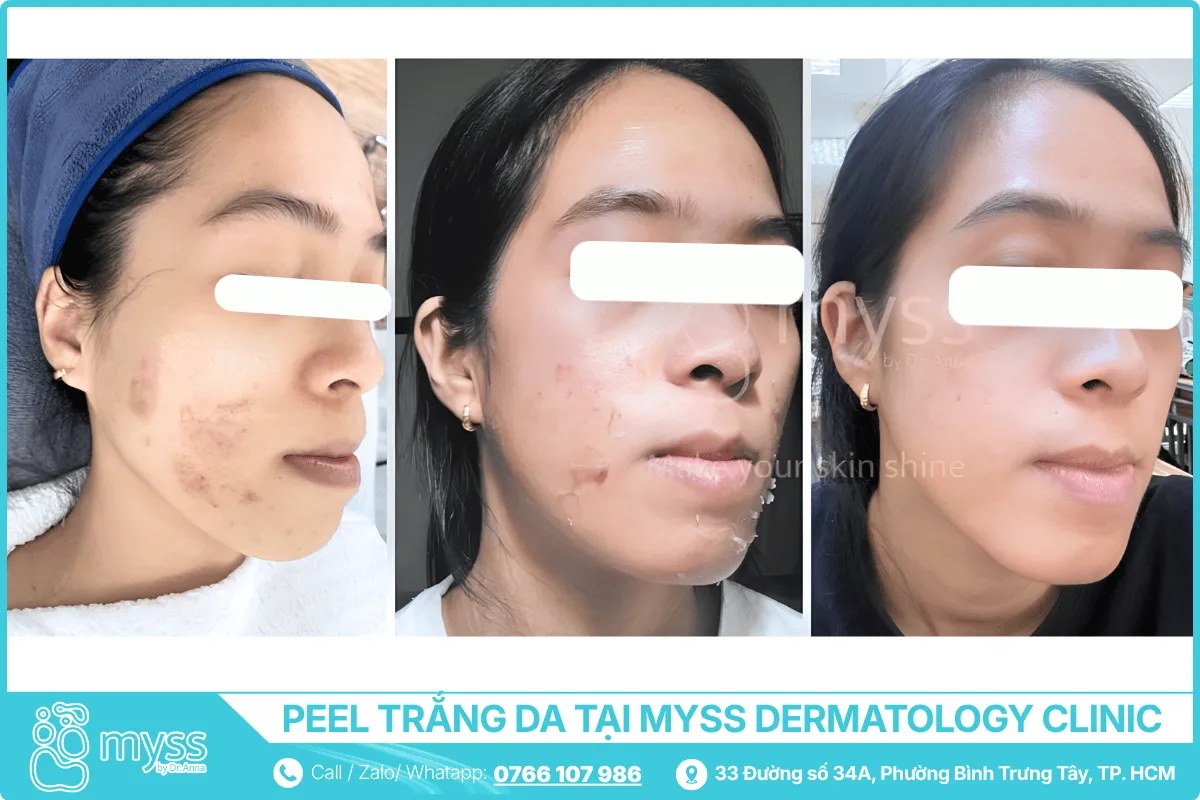
A brightening peel uses a low-concentration acid to remove the dull layer of dead skin cells, helping skin look brighter and more even. A peel cannot change your natural skin tone. People with naturally tan skin will get brighter, smoother tan skin, not fair, pinkish skin.
Asian skin is prone to post-inflammatory darkening. The wrong acid or an overly aggressive peel can leave skin darker than before. That is why a brightening peel needs a doctor to choose the acid type, concentration and contact time for each person.
A course usually takes 3-5 sessions. At MYSS Dermatology Clinic, facial brightening peels start from 1,100,000 VND per Shine Peel session.
1. What can and cannot a brightening peel do?
A brightening peel (skin-lightening peel) is a procedure in which acid is applied to the skin for a controlled time, so the pigment-containing layer of dead skin cells sheds sooner. The new skin underneath is more even and smoother. It is a superficial peel that works only within the epidermis, not down to the dermis.
| What a brightening peel can do | What a brightening peel cannot do |
|---|---|
| Brighten dull, lifeless skin | Change your natural skin tone or make skin dramatically "whiter" |
| Even out uneven tone and mild sun-induced darkening | Remove deep melasma or mixed melasma |
| Gradually fade superficial acne marks | Fill in pitted scars |
| Smooth mildly rough skin texture | Keep results forever without sun protection |
Natural skin color is determined by genes. A peel only treats the excess pigment caused by sun, inflammation and aging. That is why the right result of a peel is brighter, more even skin, not skin lighter than your original tone.
A peel also has drawbacks to know in advance:
- It needs several sessions, so you will not see the full result after one.
- Skin flakes lightly for a few days after each session, so plan your schedule around it.
- Strict sun protection is required. Skipping sunscreen after a peel can make skin darker than before.
If you have melasma, read our article on whether peels can clear melasma to see why melasma needs its own treatment approach.
2. Acid types and brightening peel packages at MYSS
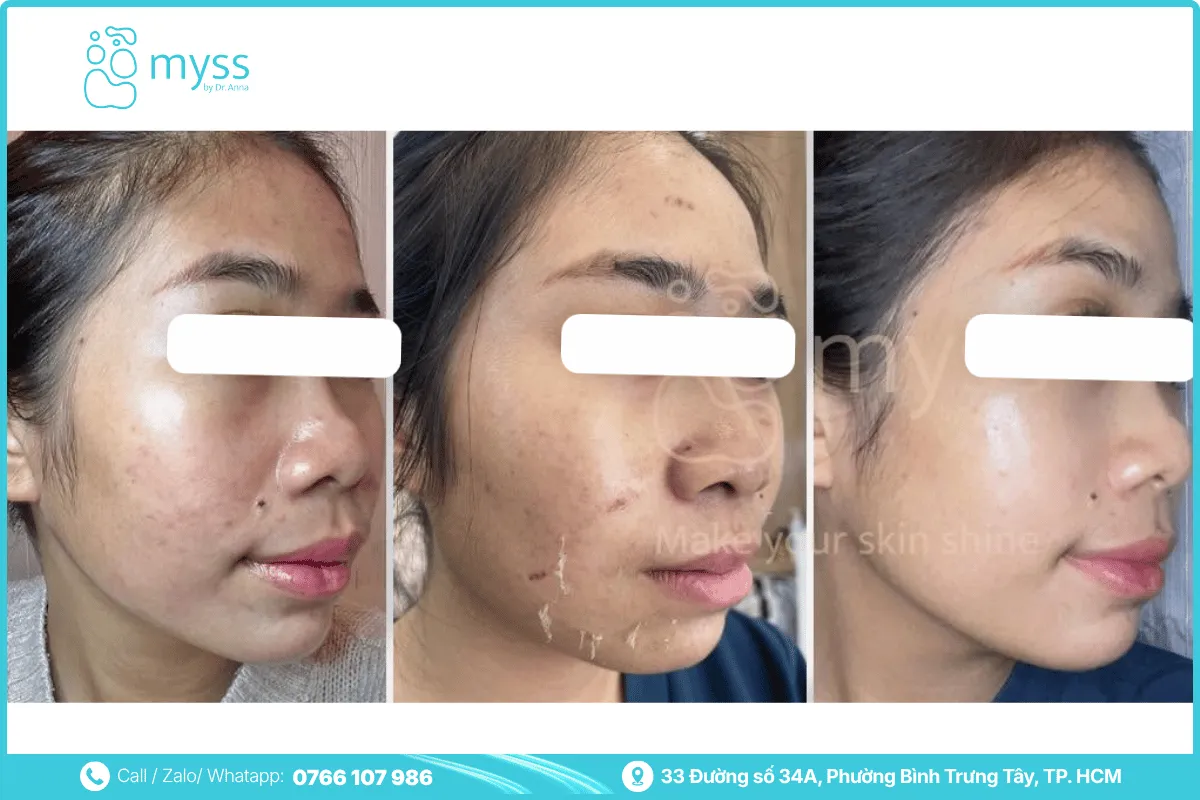
Peels come in 3 levels by depth of action: superficial, medium and deep. Brightening peels are superficial. Medium and deep peels are mainly used for scars and deep wrinkles. These two levels have a longer recovery time and a much higher risk of darkening on Asian skin, so they are very rarely chosen just to brighten skin.
Acids commonly used in superficial peels:
| Acid | Characteristics | Suitable for |
|---|---|---|
| Glycolic (AHA) | Small molecule, penetrates fast, clear brightening effect | Oily skin, normal skin, dull skin |
| Lactic (AHA) | Gentler, also has a moisturizing effect | Dry skin, slightly sensitive skin |
| Mandelic (AHA) | Large molecule, penetrates slowly, less likely to cause redness | Sensitive skin, skin prone to darkening |
| Salicylic (BHA) | Oil-soluble, cleans out pores | Oily skin, acne-prone skin |
| Low-concentration TCA | Works a little deeper than AHA | Thick skin, heavy darkening, as prescribed by a doctor |
At MYSS, the brightening peel packages are Shine Peel, White Peel and Radiance Peel for the face, and Body White Peel for the body. Each package uses a different acid type and concentration. The doctor chooses the package after examining your skin, based on your skin type, degree of darkening and history of irritation.
In melasma treatment, mandelic acid has been reported to cause less redness than some other acids (Sarkar, 2017).
3. Facial brightening peel and body brightening peel
Facial and body peels differ in acid type, concentration, contact time and aftercare.
- Facial skin is thinner and heals faster. A moderate acid concentration is used, with close monitoring during the peel.
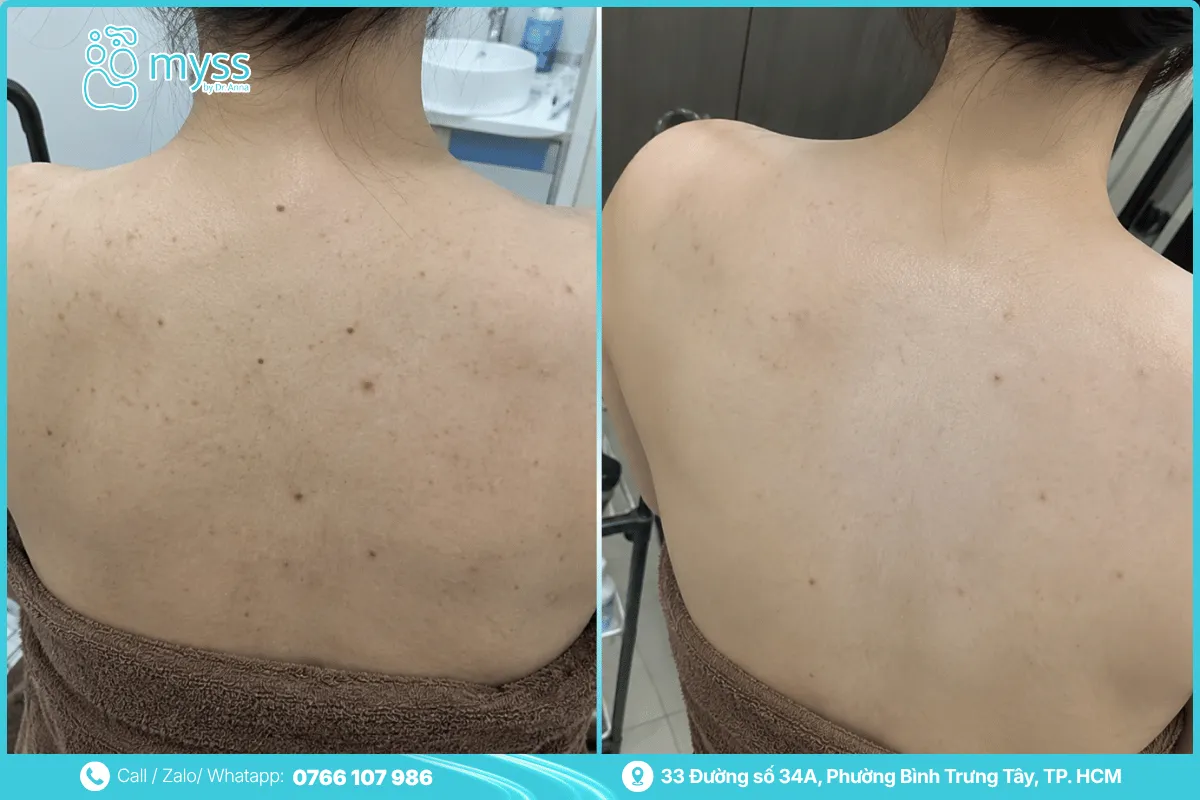
- Body skin such as the back, arms and legs heals more slowly than facial skin. The area is large, so the acid needs tighter control to avoid uneven irritation.
- The underarm area has its own characteristics: it is moist, has skin folds, and darkening is often caused by shaving and plucking. This area has a separate service, the underarm darkening peel.
Body White Peel at MYSS is for body areas with dull, uneven skin tone.
4. Peels for Vietnamese skin: why should a doctor choose the acid?
Asian skin usually falls into Fitzpatrick types III-V, meaning it has more pigment than European skin (Ho & Chan, 2009). This skin group has one weakness: it is prone to post-inflammatory darkening (post-inflammatory hyperpigmentation, PIH). Any irritation, including from an overly aggressive peel, can leave dark marks.
The American Academy of Dermatology (AAD) notes that people with darker skin may have lasting pigment problems after a peel. The 2008 guidelines of the Indian Association of Dermatologists, Venereologists and Leprologists (IADVL) place superficial peels among those usable on the darker skin of Indian patients (Khunger, 2008). These guidelines also call for skin preparation for at least 2-4 weeks before a peel.
Three things a doctor does to reduce the risk of darkening after a peel:
- Prepare the skin before the peel (priming): use products as instructed for about 2-4 weeks before the first session, helping skin tone stay even and tolerate acid better.
- Choose a low-irritation acid at a suitable concentration: start mild and increase gradually over the sessions if the skin tolerates it.
- Sun protection is mandatory before, during and after the course.
This is also why you should not buy high-concentration acids to peel at home.
Want to know which peel suits your skin? Book a skin analysis with a dermatologist at MYSS. The doctor assesses your skin type, degree of darkening and risk of darkening, then recommends a suitable peel package and number of sessions before you start.
5. Brightening peel or laser toning?
Both methods help skin look brighter and more even, but they work differently.
| Brightening peel | Laser toning | |
|---|---|---|
| Mechanism | Acid makes the pigment-containing layer of dead skin cells shed | Laser energy breaks up pigment at a deeper level |
| Suitable for | Dull, uneven skin, superficial acne marks, mild roughness | Darker pigment, long-standing darkening, some melasma cases |
| Typical number of sessions | 3-5 sessions | Usually more sessions |
| After the session | Light flaking for a few days | Usually mild redness, little flaking |
| Skin surface improvement | Yes, skin becomes smoother | Less |
The two methods can be combined in one course if the doctor finds it suitable. For melasma and deep darkening, see our melasma and freckle treatment page.
6. Treatment course and time to see results
According to the AAD, superficial peels usually need 3-5 sessions, spaced about 2-5 weeks apart. Your number of sessions depends on the degree of darkening, your skin type and the peel package.
After one superficial peel session, skin usually goes through these stages:
- First few days: skin is slightly red and tight, similar to mild sunburn.
- Around days 3-7: light flaking like fine bran, and some people barely notice any flaking.
- Once flaking is over: the new skin layer is brighter and smoother.
The AAD says skin usually heals within about 1-7 days after a superficial peel.
More flaking does not mean a better result. Skin that flakes little but looks bright and even is normal.
Results do not last forever. Skin is still exposed to sun and still ages. Daily sun protection and repeat peels on schedule help results last longer. The interval between peels is covered in the article how often should you peel.
7. The peel process at MYSS
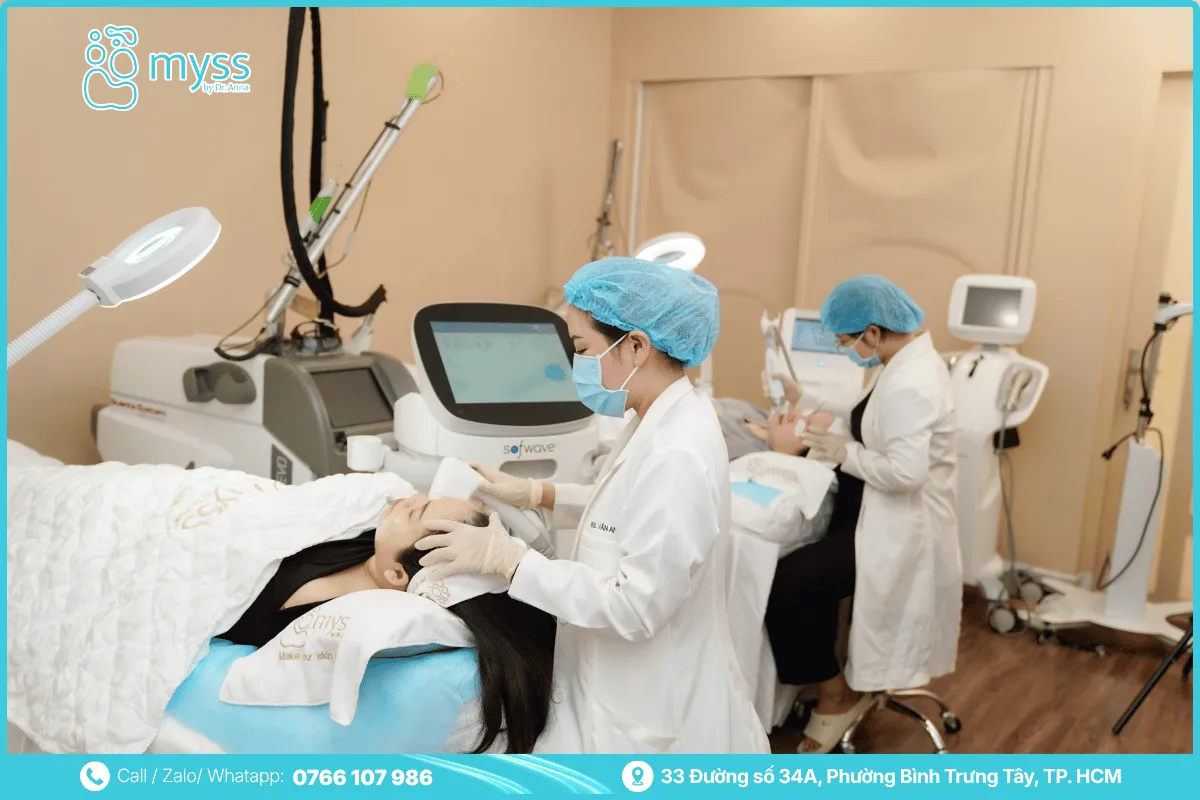
- Skin analysis and examination: assess skin type, degree of darkening, risk of darkening and history of irritation.
- Skin preparation before the peel: the doctor guides you on products to use at home for a few weeks if needed. A few days before the peel session, you are usually told to stop retinol, AHA and BHA, and not to wax or remove hair in the area to be peeled.
- Cleansing and removing oil from the skin.
- Acid application and timing: you will feel mild stinging and warmth for a few minutes. The doctor monitors your skin reaction throughout the contact time.
- Neutralizing and soothing the skin.
- Applying sunscreen, giving aftercare instructions and booking the next session.
The doctor will tell you the expected duration of the peel session during the consultation.
8. Skin care after a peel
- Do not pick at or peel off flaking skin.
- Do not exfoliate or use a cleansing brush device in the first week.
- Pause retinol, AHA, BHA and high-concentration vitamin C until the doctor allows you to resume.
- Use a gentle moisturizer in sufficient amounts.
- Apply SPF 50 sunscreen every day and cover up well when going out.
- Avoid steam rooms and chlorinated pools for a few days.
If a few small pimples appear after the peel, this is usually a temporary reaction as the dead skin layer sheds. Do not squeeze them, and tell your doctor if there are many pimples or they become red and inflamed.
9. Brightening peel cost
At MYSS Dermatology Clinic:
- Facial brightening peel: from 1,100,000 VND per Shine Peel session.
- Body brightening peel: from 1,650,000 VND per Body White Peel session.
Cost varies with the acid package, the treated area (face or body) and the number of sessions in the course. That is why MYSS only quotes a course price after the doctor has examined your skin. General information on the cost of different peels is in the article how much does a peel course cost.
Book a skin analysis to find out which peel package suits your skin, how many sessions you need and the estimated total cost.
10. Who should not have a brightening peel?
- Pregnant or breastfeeding: tell your doctor so they can choose the acid, and the peel may be postponed
- Taking oral acne medication or having stopped it only recently: tell your doctor so they can consider the timing of the peel
- Inflamed skin, eczema, herpes or open wounds
- Recent laser, hair removal or waxing in the area to be peeled
- A tendency to form keloid scars
- Skin that is irritated, or thin and weak and not yet recovered
- Recent heavy sun exposure or sunburned skin
Questions about safety, peeling at home and peeling during pregnancy are answered in detail in the article should you get a peel.
11. Risks to know
11.1 Common reactions
Redness, mild stinging when the acid is applied, tight skin, and fine flaking for a few days. These reactions usually go away on their own within a few days.
11.2 Possible complications
- Post-inflammatory darkening: more common on darker skin, especially without skin preparation, with an overly aggressive peel, or when sun protection is skipped.
- Prolonged irritation: redness and stinging for several days on sensitive skin.
- Chemical burns: usually from peeling at home with a high-concentration acid left on too long. First-step handling is covered in the article what to do if a peel burns your skin.
- Cold sore flare-ups in people with a history of them.
11.3 Signs you should return to the clinic
- Stinging that increases after 48 hours instead of easing
- Blisters, oozing or crusting
- New dark patches appearing
- Redness that does not ease after 1 week
12. Frequently asked questions about brightening peels
Does a peel whiten skin?
A peel makes skin brighter and more even by removing the layer of dead skin cells that holds excess pigment. A peel does not change natural skin color. People with tan skin will have brighter, smoother tan skin, not white skin.
How many peel sessions does it take for skin to brighten?
Skin usually looks brighter and smoother once flaking is over, about a week after the first session. To see a clear change in evenness, superficial peels usually need about 3-5 sessions, spaced 2-5 weeks apart as directed by your doctor.
What should I do if my skin darkens after a peel?
Stop all products with acid or retinol right away, protect your skin carefully from the sun and contact the doctor who performed your peel. The time for dark marks to fade differs from person to person. On darker skin, marks can last several months, so early follow-up with a doctor is needed. Do not apply high-concentration whitening creams on your own.
Does a brightening peel thin the skin?
A superficial peel done as indicated does not thin the skin. The shed layer of dead skin cells is replaced by a new one. Skin only becomes weaker when a peel is too deep, the concentration is too high, or skin does not recover enough between sessions. Details are in the article does peeling thin the skin.
How many sessions does a body brightening peel need?
A body brightening peel usually needs a similar or higher number of sessions than the face, about 3-5 sessions or more, because body skin heals more slowly. The doctor recommends a specific number of sessions after seeing the area to be peeled.
Should I choose a brightening peel or laser toning?
Dull, uneven skin with mild roughness usually suits a peel. Darker pigment and long-standing darkening may need laser toning or a combination of both. The doctor decides after a skin analysis.
Do I need a whitening cream after a brightening peel?
Not necessarily. What you need to do is use a gentle moisturizer and wear sunscreen every day. If you need a supportive brightening product, the doctor will choose one that suits your skin and tell you when to start using it.
13. Book a skin analysis before your peel
A peel that is right for Vietnamese skin starts with choosing the right acid. Book a skin analysis with a dermatologist at MYSS Dermatology Clinic to find out which peel package suits your skin, what your risk of darkening is and how many sessions you need. You get a specific answer before you decide.

14. References
- American Academy of Dermatology. Chemical peels: FAQs. https://www.aad.org/public/cosmetic/younger-looking/chemical-peels-faqs
- Khunger N; IADVL Task Force. Standard guidelines of care for chemical peels. Indian J Dermatol Venereol Leprol. 2008;74(Suppl):S5-S12.
- Sarkar R, Arsiwala S, Dubey N, et al. Chemical Peels in Melasma: A Review with Consensus Recommendations by Indian Pigmentary Expert Group. Indian J Dermatol. 2017;62(6):578-584.
- Ho SG, Chan HH. The Asian dermatologic patient: review of common pigmentary disorders and cutaneous diseases. Am J Clin Dermatol. 2009;10(3):153-168.